In home cat euthanasia near me
Give your cat the final gift of a peaceful passing at home, surrounded by familiarity and love through a compassionate and licensed veterinarian near you.
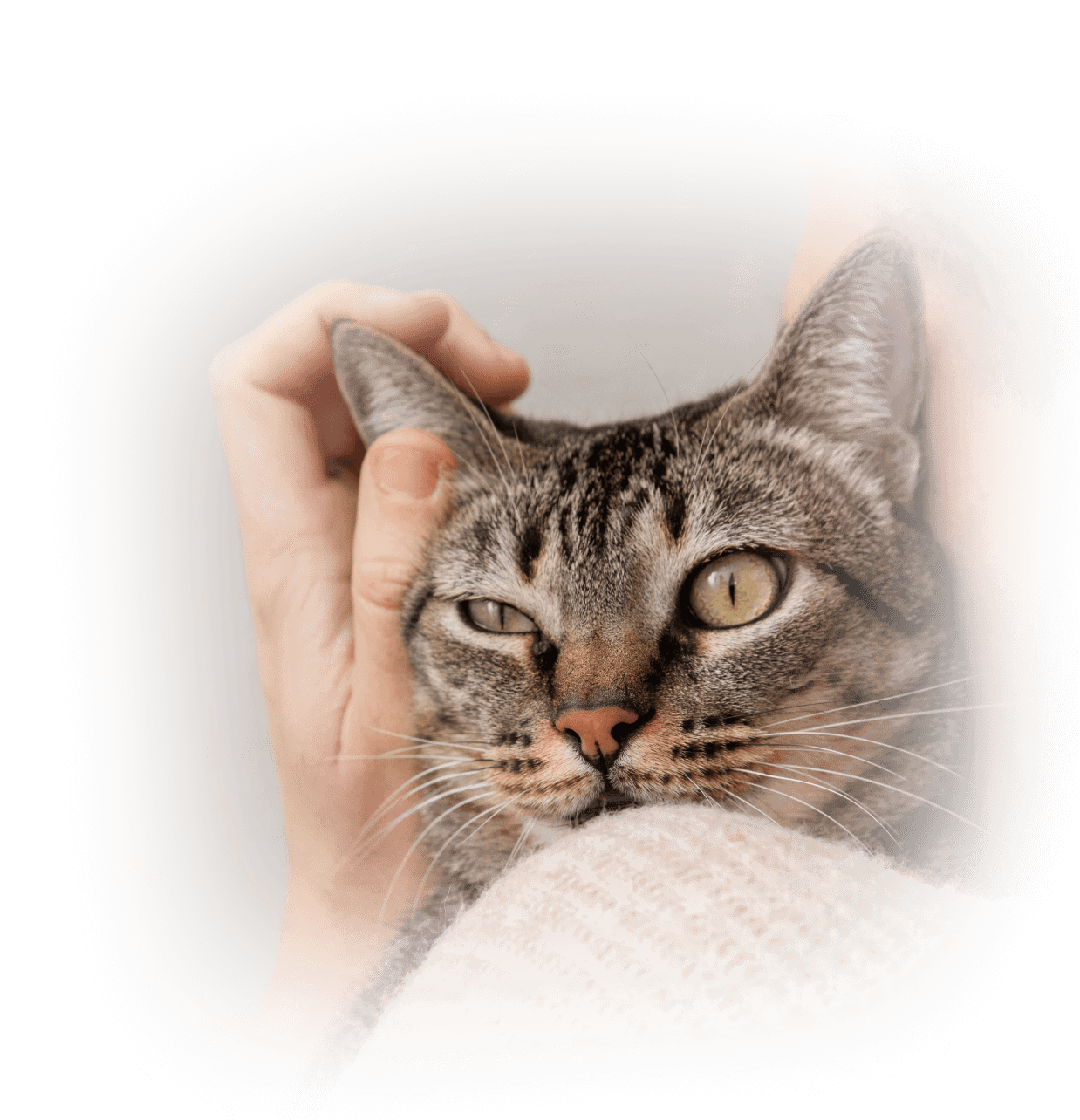
Navigating the process
Provide your furry companion with a compassionate, end-of-life care in the comfort of your home, surrounded by loved ones with expert care of a certified veterinarian serving your community.
Cat euthanasia is a compassionate choice to end a cat’s suffering from a poor quality of life due to illness, injury, or old age. A veterinarian administers medication that peacefully ends the cat’s life, ensuring the process is quick and painless, allowing the animal to gently pass on.
Consult with your veterinarian about your cat’s condition and quality of life. They will help you better understand the process and make an informed decision. It’s normal to feel grief, guilt, and uncertainty during this challenging time. Our community of veterinarians provides support and guidance through this difficult period.
There's rarely a single moment that tells you when it's time to say goodbye. Most families recognize it when their dog or cat's comfort fades across several areas at once (most often pain, breathing, eating, mobility, and engagement with you), and the bad days start to outnumber the good. Reflecting on these changes over time, then talking with your vet, brings the clearest answer.
You may hear this described as knowing when to "put your dog or cat down" or "put them to sleep" — both mean the same painful, loving decision.
Signs of declining comfort to watch over time:
- Pain or discomfort that medication no longer eases
- Labored or difficult breathing
- Eating or drinking noticeably less
- Trouble standing, walking, or climbing stairs — or, for cats, jumping to favorite spots
- Accidents or trouble staying clean, including litter-box changes
- Confusion, restlessness, or anxiety that won't settle
- Hiding or withdrawing from the family
- More bad days than good ones
What matters most is the pattern across several of these areas over time — not any single sign. A few signs that need a vet right away include gasping or open-mouth breathing (especially in cats), blue or pale gums, or repeated seizures.
Our free Quality of Life questionnaire walks through these same areas to help you reflect on your pet's comfort and bring clearer notes to your vet. It's a gentle reflection aid — not a pass-or-fail test, and never a decision-maker.
For a full, vet-developed decision framework, read How Will I Know When It's Time.
For many years, the common term for euthanasia was “put to sleep.” It’s also a good description of what actually happens during the procedure.
Your veterinarian will perform the same procedure your cat would receive at a veterinary hospital or clinic, but in the comfort of your home.
- Sedation: Your veterinarian relaxes your pet by administering a sedative. The shot will feel like getting a vaccine. Within 5 to 15 minutes, your pet will be deep asleep, relieved of all suffering.
- Anesthesia: Finally, the veterinarian will give a shot of anesthesia to slow down your pet’s respiratory system until the heart stops beating. In most cases, this takes less than a minute to occur.
During this process, your cat may experience some involuntary reactions, such as twitching or urination, but they are not conscious of these actions.
After the procedure, your veterinarian will ask if you need more time with your pet after they have passed. When you’re ready, they will confirm how you want to handle your pet’s body.
You can choose from two cremation services:
- Ashes Returned: Physical barriers keep each pet separate so you get your pet’s ashes back.
- No Ashes Returned: Your pet’s ashes will be scattered respectfully with other pets by the crematorium.
If you leave your pet’s body with us, your veterinarian will treat it with great care, respect, and dignity. We will handle all the aftercare arrangements as you asked, so you can take care of yourself and your loved ones after saying goodbye.
After the procedure, your veterinarian will ask if you need more time with your pet after they have passed. When you’re ready, they will confirm how you want to handle your pet’s body.
You can choose from two cremation services:
- Ashes Returned: Physical barriers keep each pet separate so you get your pet’s ashes back.
- No Ashes Returned: Your pet’s ashes will be scattered respectfully with other pets by the crematorium.
If you leave your pet’s body with us, your veterinarian will treat it with great care, respect, and dignity. We will handle all the aftercare arrangements as you asked, so you can take care of yourself and your
Losing a pet is very hard, and it’s okay to feel sad, angry, or confused. You might miss your pet a lot and feel empty inside. It’s normal to cry or even have trouble sleeping and eating. Talking about your pet and sharing memories can help. Remember, everyone grieves differently, so take the time you need. It’s okay to ask for help from friends, family, or even a counselor. Your feelings are valid, and it’s important to take care of yourself during this time. Read more about pet loss and the grieving process here.
During an in-home pet euthanasia appointment, your vet spends unhurried time with your pet and family before the procedure itself, which is gentle and quick. A sedative is given first so your pet drifts into a peaceful sleep, then a second injection allows them to pass calmly. Most visits last around half an hour to an hour, with as much time as you need at every step.
How the process will unfold:
Your vet arrives in a way that's meant to fit calmly into your home with everything needed for the visit. They'll spend time getting to know your pet in the spot where your pet is most comfortable, and they'll explain as much or as little about what's about to happen as feels right to you. Questions are always welcome.
A few small things that can help in advance:
- Choose a spot in your home where your pet feels safe and won't need to be moved.
- Keep their favorite treats nearby — many pets enjoy a few before the sedative.
- Invite family members and loved ones, human and four-legged, to gather close.
When you're ready, sedation is given first. Within a few minutes, your pet is in a deep, peaceful sleep, feeling nothing. The final injection follows when you say you're ready, and the heart stops gently — usually in under a minute. Afterward, you're welcome to stay with your pet for as long as you'd like.
If at any point you'd like more time, have a question, or have a special request, just say so. Your vet’s goal is to help your pet's passing be as dignified and peaceful as possible.
You may hear this called having a pet "put to sleep,” which means the same gentle, loving goodbye of euthanasia. For a full walkthrough, including how to prepare your home and what comes afterward, please read our Complete Guide to Pet Euthanasia.
Veterinarians that honor the bond with your pet
What pet parents are saying
Overall service rating from over 6385+ reviews
Dr. Amanda Harper was the epitome of professionalism. She was kind and took her time with us and our dog. Smokey was relaxed and felt very loved, at home, with his family. I would never choose to do it differently if we were ever to be in that situation again. This service made a terrible situation as easy as it could ever be. Highly recommend to all my pet-loving friends.



Dr. Lydia was an absolute angel. I couldn’t have imagined a better experience for a terrible time 😞 she was so compassionate and patient and loving and made the awful experience of loosing my soul dog as sweet as possible. I was able to schedule her within about a 3 to 4 hour window of arrival so my sweet girl wasn’t suffering more than necessary. She gave us plenty of time and space to say goodbye. Thanks again Dr. Lydia 🥺


Dr. Walden was so caring and supportive during this time. I couldn't have asked for better experience for my babies transition. Thank you so much! I would highly recommend her.


Dr. Murray provided emotional support at the time we needed it the most . My dog Lucy was 16 and , unfortunately, was dealing was dealing with illness that no longer was treatable. She was loosing weight and I just couldn’t bear a thought of driving her to office. I knew how scared she was of new smells and new people. I wanted her to be comfortable and loved in her last moments . I’ve heard about Dr. Murray from one of my patients and was able to schedule the same day visit. Although saying goodbye to a loved one is never easy, he made it a positive experience . I was able to be there for her during her last moments, just like she was always there for me for the past 16 years. Thank you , doctor!


Saying goodbye to a beloved pet is one of the hardest things a family can go through, and we are so grateful for the compassion and kindness shown by Dr. Kerri during this difficult time. This was the second time we asked her to come to our home, and once again she made such a heartbreaking moment feel peaceful, gentle, and full of dignity. She treated him with such care and gave our family the time, comfort, and support we needed. Being able to say goodbye at home, surrounded by love, meant everything to us. Her calm presence and genuine compassion will never be forgotten. Thank you for helping our sweet boy pass peacefully and for showing so much empathy during one of the hardest days for us. We truly cannot recommend her enough.


Dr Evymarie Prado was so wonderful and sensitive to our needs for our last time with our dog Pauly. She carefully check him out and waited until we were ready. Quietly and efficiently help him pass on and gave us a memorable last time together. Thank you🩷





Quality-of-life survey
Gauge your pet’s well-being by answering questions to examine various aspects of your pet’s daily life such as mobility, happiness, and appetite.
Questions you may have
You can cancel or reschedule your appointment free of charge up to 4 hours before your scheduled start. For cancellations within those final 4 hours, we ask for a $100 fee to cover the time your vet has set aside for you. If your pet has passed before the appointment, we waive that fee in good faith.
To cancel or reschedule:
- Use the link in your booking confirmation (sent to your email and text)
- Or call us at 1-833-CODAPET (833-263-2738)
- Or reach out to your vet directly if you have their contact information
If you find yourself needing to change plans on short notice, in case your pet's condition has shifted, a family member can't make it, or something unexpected has come up, please reach out as soon as you're able. Even a quick call within the final 4 hours helps us understand and respond. We try to handle late cancellations with care, especially when circumstances are clearly outside your control.
Your pet cremation options fall into three paths: cremation with your pet's ashes returned to you (private, individual, or aquamation), communal cremation where ashes aren't returned, or handling your pet's remains yourself. Available options vary by your local veterinarian. Regardless of your choice, your vet coordinates all aftercare with their local crematorium or aquamation partner.
Options where ashes are returned to you
- Private cremation — your pet is cremated alone, so the ashes returned are solely your pet's
- Individual cremation — pets are cremated in a large chamber but kept separated by physical barriers, so your pet's ashes stay identifiable and are returned in an urn
- Individual aquamation (select vets) — a gentle, water-based alternative to flame cremation where your pet’s ashes are returned in an urn
- The most common optional keepsakes when ashes are returned are paw prints, fur clippings, ink prints, and custom urns — availability varies by vet
Options where ashes are not returned
- Communal (group) cremation — your pet is cremated respectfully alongside other pets, and the crematorium scatters their ashes in their local grounds. Typically, this is the lower-cost option.
- Group aquamation (select vets) — a communal water-based process where your pet’s ashes are respectfully scattered by the aquamation partner locally
Handling your pet yourself
- Your vet leaves your pet with you to arrange aftercare, such as a home burial. Please review your local laws and regulations when choosing a final resting place.
Your vet coordinates respectful transportation and return of your pet’s ashes whenever an "ashes returned" option is chosen. The exact options and pricing are shown when you schedule a visit with a local veterinarian.
Your total at-home pet euthanasia cost includes three core fees: the in-home euthanasia service fee, a platform fee, and any travel fee for your location. Optional add-ons (cremation and memorial keepsakes) are priced separately. You'll see the full breakdown before you confirm your home visit.
The three core fees are always included:
- Euthanasia service fee — the in-home visit and the procedure itself (sedation, euthanasia, and time to say goodbye)
- Platform fee — covers booking, vet coordination, and support
- Travel fee — applies based on your distance from the attending vet. Some locations have none
Optional, priced separately:
- Cremation — private/individual (ashes returned) or communal (not returned)
- Memorial keepsakes — paw prints, fur clippings, urns
- Urgent or after-hours appointments may carry a surcharge
Since pricing varies by location, your exact total is shown on the booking page before you confirm — there's no obligation to proceed.
Common pet memorial keepsakes include paw prints (clay or ink), fur clippings, custom urns, memorial jewelry that holds your pet's ashes, and engraved plaques or garden stones. The exact options vary by vet, which you can see while booking, and any included in your base price will appear in your estimate summary.
What you may find offered (availability varies by vet):
- Clay or ink paw prints
- Fur clippings
- Standard, decorative, or custom urns
- Memorial jewelry incorporating your pet's ashes
- Engraved plaques or garden stones
- Glass art or thumbprint jewelry
You'll see the exact keepsakes your veterinarian offers and which ones are already included in your appointment when you review your estimate during booking. Anything additional you'd like can be added there, too.
Many families also create their own meaningful memorials at home: a framed photo, a planted tree, or a memory box holding their favorite toys and collars. There's no right or wrong way to remember your pet. You may also find comfort in exploring our suggestions for pet memorial ideas or viewing our pet memorial to create one of your own.
Note: You may also choose to add the memorabilia or change your mind about your choice at the time of your appointment.
Yes. If you’ve chosen cremation, your vet will respectfully transport your pet from your home to a partner crematorium after the appointment. You don’t need to do anything. Your vet will coordinate the transport, cremation, and return of your pet’s ashes.
What to expect:
• Your vet brings everything needed for a safe and dignified transport
• You decide how much time you want before they leave. There is never a rush
• If you've chosen private or individual cremation, ashes are typically returned within 2-3 weeks. This varies by vet
• For larger pets (greater than 100lbs), your vet may ask for help to move your pet with dignity — they will let you know if they need your help prior to the process
In the case of wanting a private burial, if your city/county regulations allow, you can choose to bury your pet. Please check local regulations to see if this is legal in your area.
If you want to bury your pet in a cemetery, you will need to choose and make arrangements with a local pet cemetery before the euthanasia appointment. Please be sure to let your CodaPet vet know if you have planned for such a burial.
Note: Your vet can only assist with cremation options, and does not handle burials of any type.
During an in-home pet euthanasia appointment, your vet spends unhurried time with your pet and family before the procedure itself, which is gentle and quick. A sedative is given first so your pet drifts into a peaceful sleep, then a second injection allows them to pass calmly. Most visits last around half an hour to an hour, with as much time as you need at every step.
How the process will unfold:
Your vet arrives in a way that's meant to fit calmly into your home with everything needed for the visit. They'll spend time getting to know your pet in the spot where your pet is most comfortable, and they'll explain as much or as little about what's about to happen as feels right to you. Questions are always welcome.
A few small things that can help in advance:
- Choose a spot in your home where your pet feels safe and won't need to be moved.
- Keep their favorite treats nearby — many pets enjoy a few before the sedative.
- Invite family members and loved ones, human and four-legged, to gather close.
When you're ready, sedation is given first. Within a few minutes, your pet is in a deep, peaceful sleep, feeling nothing. The final injection follows when you say you're ready, and the heart stops gently — usually in under a minute. Afterward, you're welcome to stay with your pet for as long as you'd like.
If at any point you'd like more time, have a question, or have a special request, just say so. Your vet’s goal is to help your pet's passing be as dignified and peaceful as possible.
You may hear this called having a pet "put to sleep,” which means the same gentle, loving goodbye of euthanasia. For a full walkthrough, including how to prepare your home and what comes afterward, please read our Complete Guide to Pet Euthanasia.
Feelings of grief and loss after losing a beloved pet are normal. Consider reaching out to supportive friends or family, joining pet loss support groups, or seeking guidance from mental health professionals who specialize in grief counseling. Remember, you're not alone, and compassionate support is available.
There's rarely a single moment that tells you when it's time to say goodbye. Most families recognize it when their dog or cat's comfort fades across several areas at once (most often pain, breathing, eating, mobility, and engagement with you), and the bad days start to outnumber the good. Reflecting on these changes over time, then talking with your vet, brings the clearest answer.
You may hear this described as knowing when to "put your dog or cat down" or "put them to sleep" — both mean the same painful, loving decision.
Signs of declining comfort to watch over time:
- Pain or discomfort that medication no longer eases
- Labored or difficult breathing
- Eating or drinking noticeably less
- Trouble standing, walking, or climbing stairs — or, for cats, jumping to favorite spots
- Accidents or trouble staying clean, including litter-box changes
- Confusion, restlessness, or anxiety that won't settle
- Hiding or withdrawing from the family
- More bad days than good ones
What matters most is the pattern across several of these areas over time — not any single sign. A few signs that need a vet right away include gasping or open-mouth breathing (especially in cats), blue or pale gums, or repeated seizures.
Our free Quality of Life questionnaire walks through these same areas to help you reflect on your pet's comfort and bring clearer notes to your vet. It's a gentle reflection aid — not a pass-or-fail test, and never a decision-maker.
For a full, vet-developed decision framework, read How Will I Know When It's Time.